Sunday, 5 March 2017

Building The Queensferry Crossing

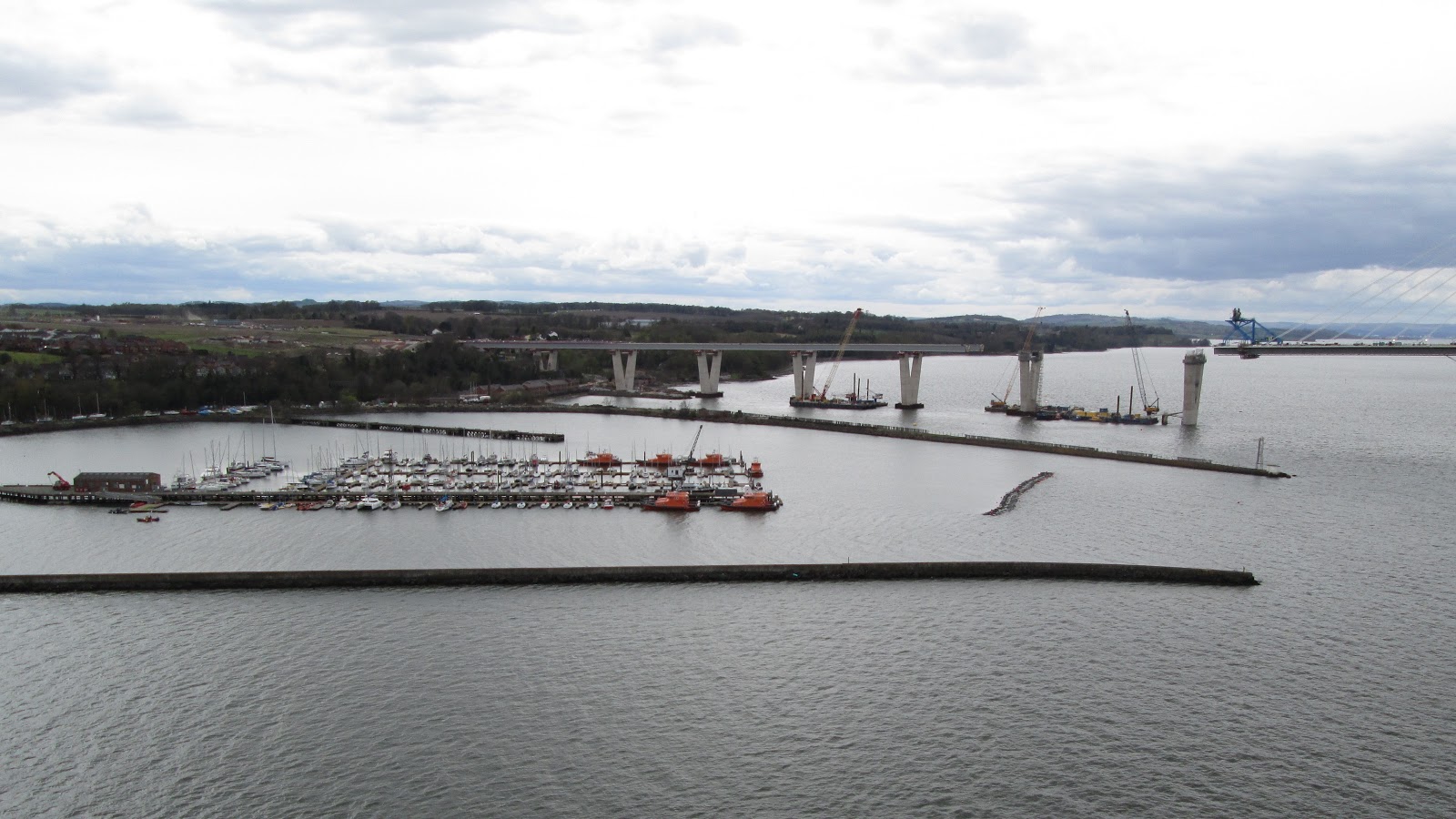
A few weeks back the last piece of roadway decking was added to the new Queensferry Crossing, which is the name for the latest bridge to be built over the River Forth. Once the roadway decking has been 'surfaced' and the approach road on the north side completed (plus a few thousand other little things) the bridge will be ready for public use.
This will become the third bridge crossing at Queensferry, with one being built in each of the last three centuries:
  • Forth Rail Bridge completed 1890
  • Forth Road Bridge completed 1964
  • Queensferry Crossing completed 2017
Over the last few years I have taken some photos and videos of the new bridge during construction so I thought I would share these with you.:
Firstly the installation of the caissons (water-tight retaining structures) required to sink the foundations for the bridge towers. Early in 2013 we saw these huge metal rings being lowered into the River Forth to sit on the river bed.


Line of Caissons for New Bridge

Sinking Caissons for new Queensferry Crossing
The mud and silt was then removed from inside the caissons before the water was pumped out. They were then filled with concrete to form the foundations for the bridge towers. By the end of 2013 the foundations were almost in place:

Building a third Forth Bridge at Queensferry

Laying the foundations for the new Queensferry Crossing
As well as the construction taking place out on the river, work was also underway to construct the approach piers on the north and south banks. By the end of the summer in 2014 the roadway deckings were being inched out on to these piers using temporary support frames:

Temporary support frame for southern approach roadway decking

Southern Approach Roadway starting to take shape
 By this time the bridge towers were clearly visible as they rose from the river and the roadway decking could be seen pushing out from both shores. The southern roadway seemed to be a bit further advanced than the one on the northern shore ............. but hey! ..........it wasn't a race or anything like that!!.......... just the Fifers were a bit slower, that's all............. I might pay for that comment!
Here is how the bridge construction looked in August 2014:

Bridge Construction from Southern Shore

Bridge Construction from Society Point
Sorry about the quality of the last two photos, it was a bit murky that day.
As this new bridge is to be a replacement for the existing Forth Road Bridge (which will be retained for public transport, bicycles and pedestrians only) there was also major road-works underway on both shores in order to divert the A90. For those of you who don't know anything about the A90 it is the main route from Edinburgh heading over the Forth Road Bridge to Fife, Perth, Dundee and all points north (in other words quite a major artery).
The road-works on the north (Fife) side were much more substantial and complicated than on the south side as they  accommodate a railway line, the main route to Rosyth ferry port and a major sewage works serving Dunfermline. They also had to do lots of rock blasting to carve out the new route for the A90.........which was mostly carried out at night as I remember.
On the southern side we had a slightly easier time of it, but they did have to replace a bridge which carried the B800 (Queensferry to Kirkliston road) as it wasn't wide enough to span the new A90 being constructed. This involved some impressive lifting equipment as the new flyover was lifted in to place over the period of a couple of nights in October 2014:

Part of new B800 Flyover

Serious Lifting Equipment

Half of new B800 Flyover in place
By April 2015 the three bridge towers were almost complete, ready for the next phase of construction; which would involved attaching sections of roadway decking to either side of the towers:

Three towers taking shape

North tower with Rosyth in the background

Central and Southern Towers

Southern Approach Roadway at Port Edgar
Towards the end of 2015 the work on the southern side of the A90 was well underway and the following photos were taken from the new B800 flyover which was now up and running:

Removal of old B800 flyover with new bridge towers in background

New route for A90 taking shape

Work to remove remains of old B800 flyover
The progress on the towers by the end of 2015 can be seen in this photo taken from the Transport Scotland View Point:

Queensferry Crossing construction from Transport Scotland viewpoint
You can see that the towers are almost at their full height and that some decking sections have already been suspended on cables from the towers. This progress on the construction of the bridge is also highlighted in the following photos taken in January 2016:

Southern Tower viewed from beneath roadway decking

Southern Roadway Decking pushing out

Roadway Decking suspended from Southern Tower

North and Central Towers with suspended Roadway Decking

New Bridge viewed from Southern Shore

New Bridge viewed from Echline
A couple of months later and the roadway decking had extended further on each of the towers and on the north and south approaches:

Bridge construction viewed from southern shore

Bridge construction viewed from Society Point
By April 2016 the roadway decking between the north tower and the north approach had almost joined up (Yes the Fifers appeared to be winning the race!!). The gaps in other areas were getting smaller as well:

North Tower and North Approach almost joined together

Bridge Construction April 2016

Bridging the gap

Gap between Southern Approach and Southern Tower
Construction of the roadway decking continued throughout 2016 and by the end of the year there was only one piece of the jigsaw remaining and that was the final link to the Southern Approach:

The missing link viewed from southern shore


Bridge roadway almost complete, viewed from Society Point
Some bad weather over the winter months meant it was February 2017 before the final section of roadway decking was winched in to position and bolted together:

The final link now in place

Queensferry Crossing linked up February 2017

Final Link viewed from Port Edgar
 Whilst all this bridge construction was underway there was another major structure taking shape over in Rosyth. A new Royal Navy Aircraft Carrier was being built over in the Rosyth Dockyard and in February 2017 it was on clear view:

New Aircraft Carrier viewed from Society Point
So that is about it for my story about the construction of the new Queensferry Crossing but
before I go here is a compilation video showing some of the key stages of the bridge construction:


I will leave you to ponder whether there will ever be a Fourth Forth Bridge at Queensferry .......... maybe have to wait until next century for that!!

Take care

TeddyEdward

Friday, 27 January 2017

Feed The Burds

Cast your mind back to last Spring and the blog I posted covering the Blue Tits that nested in my bird box fitted with the camera. Well, this winter I converted the same bird box in to a bird feeder and filled it full of seeds to see what birds it would attract.
The first birds to appear were Goldfinch; we always seem to get a lot of these colourful and feisty birds in our garden:


The question was what other birds would use the bird box feeder?
This time-lapse photography clip should give you an idea of the different birds visiting the feeder:


Now let's look at each of these different birds in a bit more detail, starting with the original residents of the bird box...........the Blue Tit:

Blue Tit
These charismatic little birds frequent most feeders and can be quite aggressive towards birds larger than themselves. They are also opportunists and often sneak into the bird feeder whilst other birds are arguing amongst themselves. Here is a little clip of the Blue Tits feeding at the bird box feeder:


Next up is the Blue Tit's larger cousin the Great Tit:

Great Tit
Although slightly bigger than the Blue Tit, in my experience the Great Tit is less aggressive and more likely to wait its turn at the feeder rather than 'pester' those birds already feeding. Great Tits are easily distinguished by their black 'bib'........... which looks like they have a black scarf tied around their neck and dangling down their chest...........see what you think!


Another tit that visited the bird box feeder was the Coal Tit:

Coal Tit
The Coal Tit is similar in size to the Blue Tit but it is much more shy and timid. It is normally seen high up in the branches of conifer trees, where it flits from branch to branch feeding on seeds and insects. An easy way to distinguish it from a Blue Tit is that one has a blue cap and the other has a cap as black as coal..........I will leave you to figure out which is which! Coal Tits don't dwell long at feeders, only enough time to swoop in, grab a seed then fly back to eat it in a nearby bush or tree (hence the very short clip):


OK so the Coal Tit also has a white stripe on its black cap........ and the Great Tit also has a black cap to match its scarf.............I'm sure you can identify them easily (I'll not mention the Marsh Tit or Willow Tit that will just confuse you, and we don't get them on our feeder)
 Moving on, we will now look at one of the most popular garden bird and a favourite of gardeners (apparently) that is the Robin:

Robin
I'm sure I don't have to describe what a Robin looks like. In terms of its behaviour it can appear a very friendly bird as it follows you around the garden in the hope that you disturb some worms or insects for it to eat. Don't be fooled ...........this is a psycho-bird ..........especially if you are another Robin encroaching on their territory............then the feathers will really fly. Luckily we only had one at the feeder when I recorded it:


Let's have a look at the finches that visited the bird box feeder, starting with a very common garden visitor, the Chaffinch:

Chaffinch
The Chaffinch is often overlooked, but a male bird can be quite stunning. It is not the smallest of the finches that visit our garden and it is often seen in small flocks rather than singly (especially in winter). Despite this it can be quite reticent about staking its place at the feeder, this is mainly down to the fact it is more comfortable as a 'ground feeder' and finds perching on hanging tube feeders quite difficult. You are more likely to see them on the ground below the feeder hovering up any dropped seeds. My bird box feeder however is a bit more accommodating for birds such as the Chaffinch:


The next finch on the list is the bully boy of the feeder, that is the Greenfinch:

Greenfinch
The Greenfinch (as the name suggests) is predominately green......... at least the males are....... with the females being a bit more brown. They are much bulkier birds than a chaffinch and have a powerful beak ....... not something you want a nip from! They are not frightened to muscle other (smaller) birds out the way to get to the feeder, as can be seen in this little spat with some Goldfinch:


That brings us on to the Goldfinch, which we have already seen likes the bird box feeder:

Goldfinch
This colourful finch also moves around in small flocks and although it is slightly smaller in size than the Chaffinch it is far from timid. Our garden gets a lot of Goldfinch, often in flocks of about a dozen and it can seem like a group of unruly teenagers have invaded the feeders. The are noisy, boisterous and brash; not scared of taking on birds much bigger than themselves as they normally outnumber them. They also have a tendency to squabble amongst themselves, often leaving the door open for other birds to sneak in and steal a seed or two:


The Starling does not need to 'sneak' in to the feeder, it is not to be argued with:

Starling
This is the largest bird that visited the bird box feeder and with its sharp bayonet-like beak other birds just get out its way......... fast! It is one of my favourite birds and I think is hugely under-rated. It is a very colourful bird in many ways; with its iridescent green and purple plumage, its exuberant character and  its fantastic ability to mimic other bird calls (Curlew, Buzzard, etc.) I just think it deserves more respect than it often gets:


That about covers all the birds that visited the bird box feeder over the last few weeks.......... however I will end this blog with a video of another finch that visited the garden but chose to feed on the last of the seeds in the Birch catkins rather than visit the feeder.

Ladies and Gentleman I give you the Bullfinch:


What a show-off!!!

Take Care

TeddyEdward

Wednesday, 14 December 2016

Loch Lomond Seaplane Trip

Earlier on in the year some generous family members clubbed together to buy me a fantastic ??th birthday present; It was a seaplane trip from Loch Lomond flying over parts of the west coast of Scotland.
Despite several attempts to book this flight (which were all cancelled due to bad weather) I haven't been able to get up in the air until now. It was however worth the wait and here is the photos and video clips to prove it.
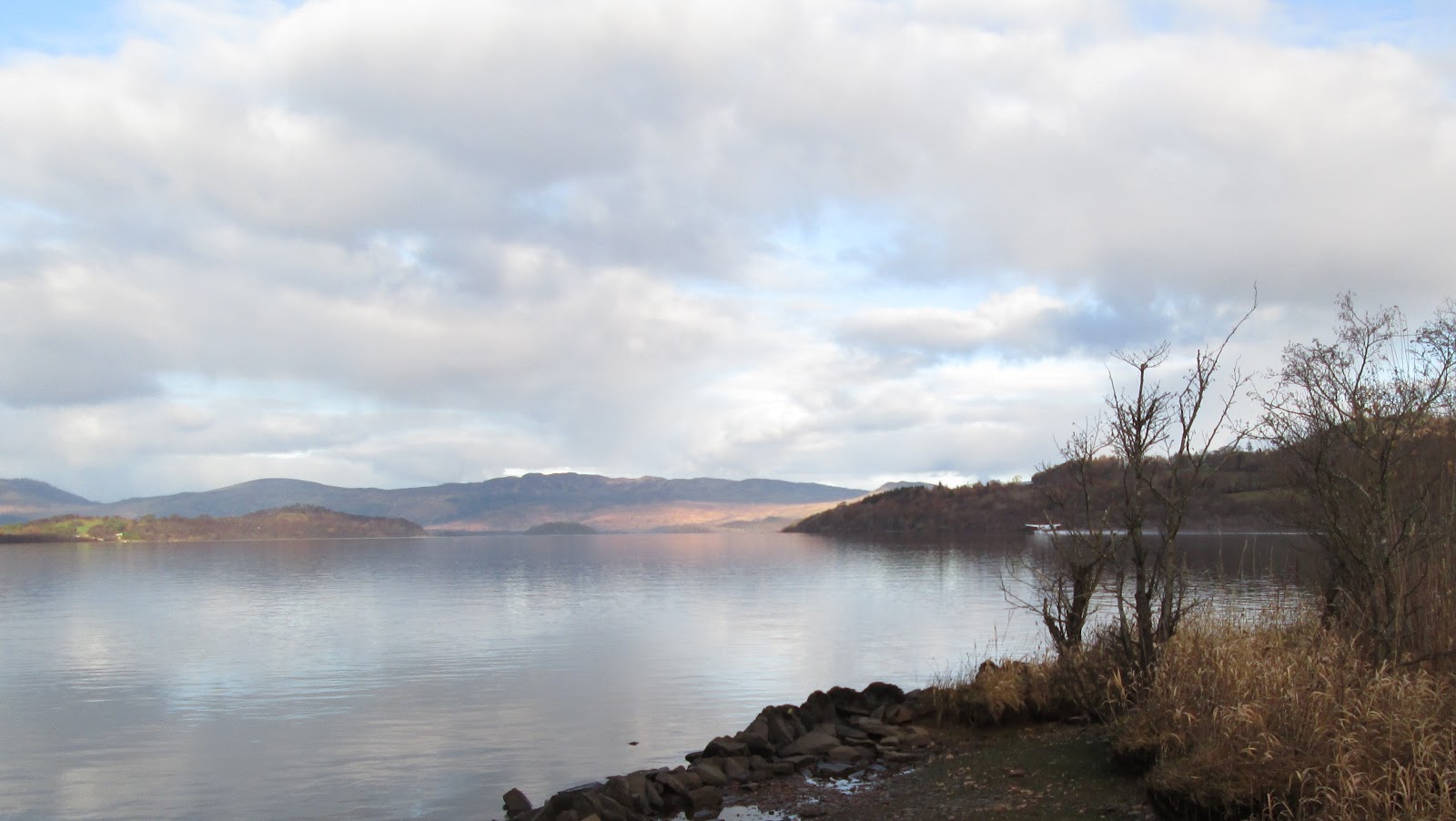
It was a calm but slightly cloudy day when we left to go to Loch Lomond, but it cleared up a little when we got there:

A Calm Loch Lomond

Preparing the Plane
Boarding the Plane
Ready to go
 The plane taxied (is it still called taxi-ing on water?) out to deeper water and then revved up for take-off. Moira did her best to capture the take off from the shore-line although it was a bit far away for her little camera:

Seaplane comes past headland

Travelling along the watery runway

Just airborne

Banking to the left
From inside the plane I managed to video the point of take-off:


The take-off was so smooth I barely noticed that we had left the water. We hadn't been airborne for long before the pilot banked to the left, flew over Inchmurrin island then headed over the west shore of the loch.

Inchmurrin Island

West Shore of Loch Lomond
We flew over land towards Helensburgh and our trusty pilot highlighted the sights that could be seen out each side of the plane, such as the Arrochar Alps:

Our Trusty Seaplane Pilot

The Arrochar Alps
We then headed west down the Firth of Clyde ............. or "doon ra watter" as they say in the local parlance. Here we passed by many of the sea lochs that make this a very popular firth (or estuary) with the boating fraternity............and also popular with the Royal Navy, etc.


Faslane on the Gare Loch

Coulport on Loch Long

Gairletter Point Caravan Park

Loch Striven
We also passed the inland Loch Eck, before heading to the Kyles of Bute:

Loch Eck

Approaching Kyles of Bute
The Island of Bute is surrounded on three sides by fingers of the mainland with only narrow channels of water separating them; on a map it looked like the island is being pinched by the mainland (sounds painful). The channels of water are known collectively as the Kyles of Bute, with Loch Riddon being the northern body of water.

Loch Riddon and the Kyles of Bute

Colintraive Ferry to Bute
Heading towards the Kintyre Peninsula we passed over the pretty villages of Tighnabruaich, Portavadie and Tarbert:

Tighnabruaich on the Kyles of Bute

Portavadie at the mouth of Loch Fyne

Tarbert on the Kintyre Peninsula
Tarbert sits on a narrow strip of land which joins the Kintyre Peninsula on to the mainland. On its east side lies Loch Fyne and on the west side lies Loch Tarbert, with no more than a mile of land between the two.

Loch Fyne with Tarbert in the foreground
After we crossed the Kintyre Peninsula our thoughtful pilot circled over the area known as the Sound of Jura, affording us spectacular views of the islands of Jura, Islay, Gigha and Arran.


Here are some of the photos I took as we circled round the islands.

Jura in the clouds

Islay (left) and Jura (right)

Towards Gigha
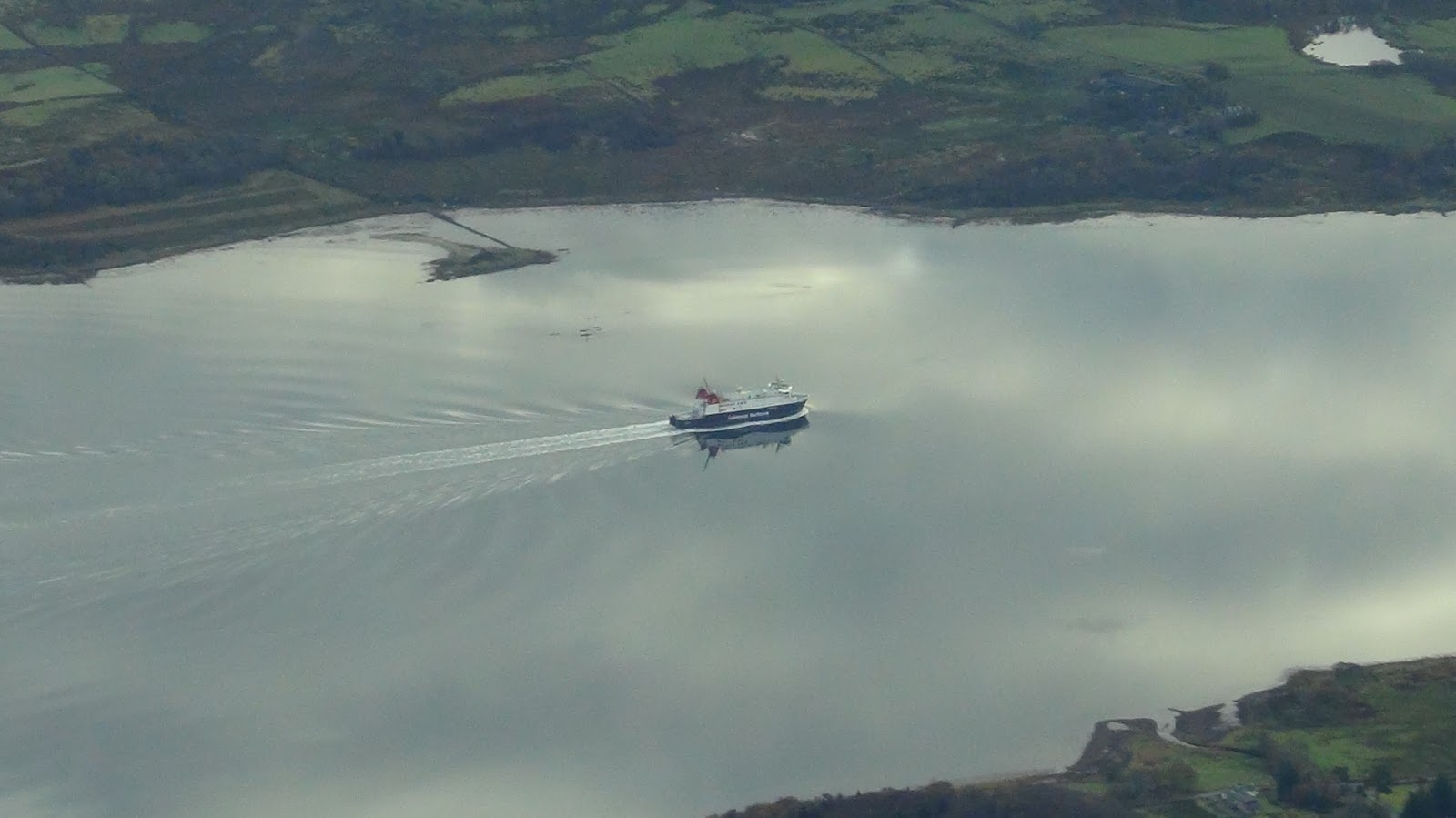
On our return journey we passed back over the Kintyre Peninsula and had a good view of the Isle of  Arran. I also managed to capture the ferry to Islay as it was leaving Kennacraig on the shores of Loch Tarbert:

Looking down the Kintyre Peninsula

Isle of Arran off the Kintyre Peninsula

Kennacraig to Islay Ferry
I was really enjoying this flight, not just for the spectacular scenery but also for the close-up views of remote places that you don't get from a road trip:

Low Stillaig

Ostel Bay

Rhubodach (Bute) to Colintraive Ferry
On the way back the pilot took us up the steep-sided Loch Striven which has quite a bit of WW2 military history as it was the place they trialled the midget submarines used to attack the Tirpitz as it lay in a Norwegian fjord and it was also used as the testing ground for the famous Dambusters bouncing bomb (without the explosives of course).

Loch Striven
After Loch Striven we continued our return journey heading East, passing by some of the sea lochs I saw in our outward journey, but with a slightly different perspective:

Dalinlongart and the Holy Loch

Holy Loch

Looking South down Loch Long
We continued East along the Firth of Clyde passing places like Rossneath, Rhu and Helensburgh:

Rossneath, with Gourock and Greenock on the other side of the Clyde
Rhu and Helensburgh
Travelling overland from Helensburgh we reached Loch Lomond, then the pilot headed North to give us view of the Eastern shore and also Ben Lomond:

Loch Lomond East Shore and the Island of Inchfad
Ben Lomond and the Island of Inchlonaig

The video clip below probably provides the best views of Loch Lomond and Ben Lomond:


After this we flew past Loch Lomond Golf Club before coming in to land on the loch.
The landing was as smooth as the take-off; and without the tell-tale spray coming from the floats you would never have known that we had touched down.


Moira had left the swanky bar in the Cameron House Hotel just in time to capture the seaplane landing:

Seaplane touches down

Heading to the pier

Arriving at the pier
Once at the pier I disembarked from the seaplane, thank the pilot for a most enjoyable flight and got the obligatory photograph with the plane:

Disembarking from Seaplane

A Happy Seaplane Passenger
I can only say that if you get the chance to do this then grab it with both hands as it was a great experience.
Thanks again to those family members who generously gave me this seaplane trip as a birthday present...........it was indeed a trip of a lifetime........... I one won't forget!

Take Care

TeddyEdward